Home/
sports/
Numbers That Define Spain's World Cup Glory: Records Tumble as Yamal, Messi and Mbappé Make History
sports
Numbers That Define Spain's World Cup Glory: Records Tumble as Yamal, Messi and Mbappé Make History
Spain's 1-0 extra-time win over Argentina in the 2026 World Cup final wasn't just a thrilling finish; it was a night packed with statistical milestones. Ferran Torres struck in the 106th minute to give Luis de la Fuente's side the trophy, but behind that winning goal lies a mountain of numbers that tell the story of a tournament for the ages.
By Oskar Malec | Last Updated: 20 Jul 2026
Spain's Historic Coronation
With this win, Spain claimed their second World Cup title and first since 2010, joining an exclusive group of seven nations to have won the tournament more than once. They also became only the third reigning European champion to go on and win the World Cup, following Spain's own 2008-10 run and West Germany's 1972-74 double.
Torres' strike was his third World Cup goal overall and his first of this tournament, having previously scored twice against Costa Rica back in 2022. What made it even more special was the timing. His 106th-minute goal ranks as the third-latest match-winner in a World Cup final, and it made him only the second substitute ever to score a final-winning goal, joining Germany's Mario Götze from 2014.
Spain's defense was arguably the real story of the tournament. They kept seven clean sheets, a new record for a single World Cup campaign, and conceded just one goal across the entire competition, courtesy of Belgium's Charles De Ketelaere. That's the fewest goals allowed by any champion in World Cup history, with only Switzerland's goalless 2006 campaign coming close, though they were eliminated in the round of 16. On the expected-goals front, Spain gave up just 2.3 xG all tournament, averaging 0.3 per match, the best defensive number recorded by any team since 1996.
Spain's dominance extends well beyond this tournament, too. The team is now unbeaten in 38 consecutive matches across all competitions, breaking Italy's previous record streak set between 2018 and 2021. They've also won six of their last seven major tournament finals, a haul bettered only by Germany among European nations.
De la Fuente and a Golden Generation
Manager Luis de la Fuente made history of his own, becoming the oldest coach to ever win a World Cup at 65 years and 29 days old. His record at major tournaments remains spotless, 15 games without a single defeat, the longest unbeaten start by any manager across both the World Cup and European Championships. Under his watch, Spain has won 14 of their last 15 games between the Euros and the World Cup, with their only blemish being a goalless draw against Cape Verde.
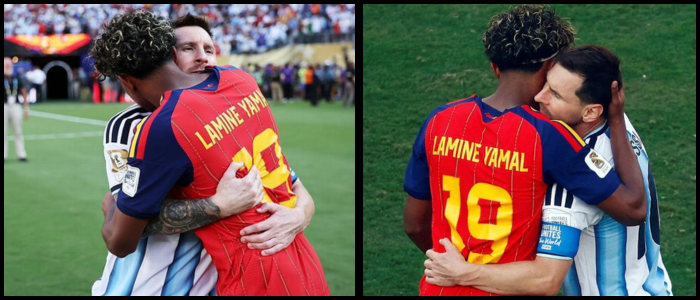
The individual milestones were just as remarkable. At 19 years and 6 days old, Lamine Yamal became tied for the fourth-youngest World Cup winner ever, while teammate Pau Cubarsí, at 19 years and 178 days, ranks seventh-youngest. Yamal also became the third-youngest player to feature in a World Cup final, behind only Pelé in 1958 and Italy's Giuseppe Bergomi in 1982. Even more impressively, he's now the first teenager in history to win both the European Championship and the World Cup.
Elsewhere, Fabián Ruiz became just the tenth player ever to win both the World Cup and the Champions League in the same season. Cubarsí also impressed on the ball, completing 121 passes in the final, the second-most by any player in a World Cup final over the last six decades, trailing only Brazil's Dunga, who managed 130 back in 1994.
Spain swept the individual awards, too. Rodri picked up the Golden Ball, becoming the first Spaniard to do so, and the first winner from the champion nation since Brazil's Romário claimed it 32 years ago in 1994. Cubarsí was named Best Young Player, another first for a Spanish player, while goalkeeper Unai Simón took home the Golden Glove, becoming only the second Spaniard to do so.
Heartbreak for Argentina, History for Messi and Mbappé
For Argentina, the final brought a familiar sting. They became the fourth consecutive defending champion to reach the final and lose it, following Argentina in 1990, Brazil in 1998, and France in 2022. It's also the third time in their last four World Cup final appearances that they've finished as runners-up. Their 13-match unbeaten run at the World Cup came crashing down too, marking their first tournament defeat since the opening-match shock against Saudi Arabia in 2022. Strangely, Argentina also became the first team in 60 years to finish a World Cup final without registering a single shot on target, something they've now done three times, in 1990, 2014, and 2026.
Still, there were personal triumphs amid the disappointment. Lionel Messi became the first man to start three World Cup finals and only the second player ever, after Brazil's Cafú, to appear in three. He also became the first player to captain his nation in three separate finals, and at 39 years and 25 days old, he's now the oldest outfield player to start one. In a neat symbol of football's generational shift, this final also marked the first time in World Cup history that two starting players were separated by more than 20 years in age, Messi, born in June 1987, and Yamal, born in July 2007, a gap of 20 years and 19 days. Messi's involvement was more limited than usual, though, with just 54 touches, his fifth-fewest in any World Cup start of his career.
At the other end, Argentina's goalkeeper Emiliano Martínez was outstanding, making 11 saves, the most by any goalkeeper in a World Cup final over the last 60 years. Argentina's Enzo Fernández also became the sixth player ever sent off in a World Cup final, the first since Netherlands' Johnny Heitinga against Spain back in 2010.
One record did go Argentina's way, though. Kylian Mbappé finished as the tournament's top scorer, winning the Golden Boot for the second World Cup running, after also topping the charts in 2022, making him the first player ever to achieve that feat twice.
And for the trivia lovers, halftime lasted a little longer than usual, too. There was a gap of 27 minutes and 24 seconds between the first half ending and the second half kicking off.







 Home
Home