Home/
world/
Trump Hosts Xi With Pomp, Yet No Breakthroughs
world
Trump Hosts Xi With Pomp, Yet No Breakthroughs
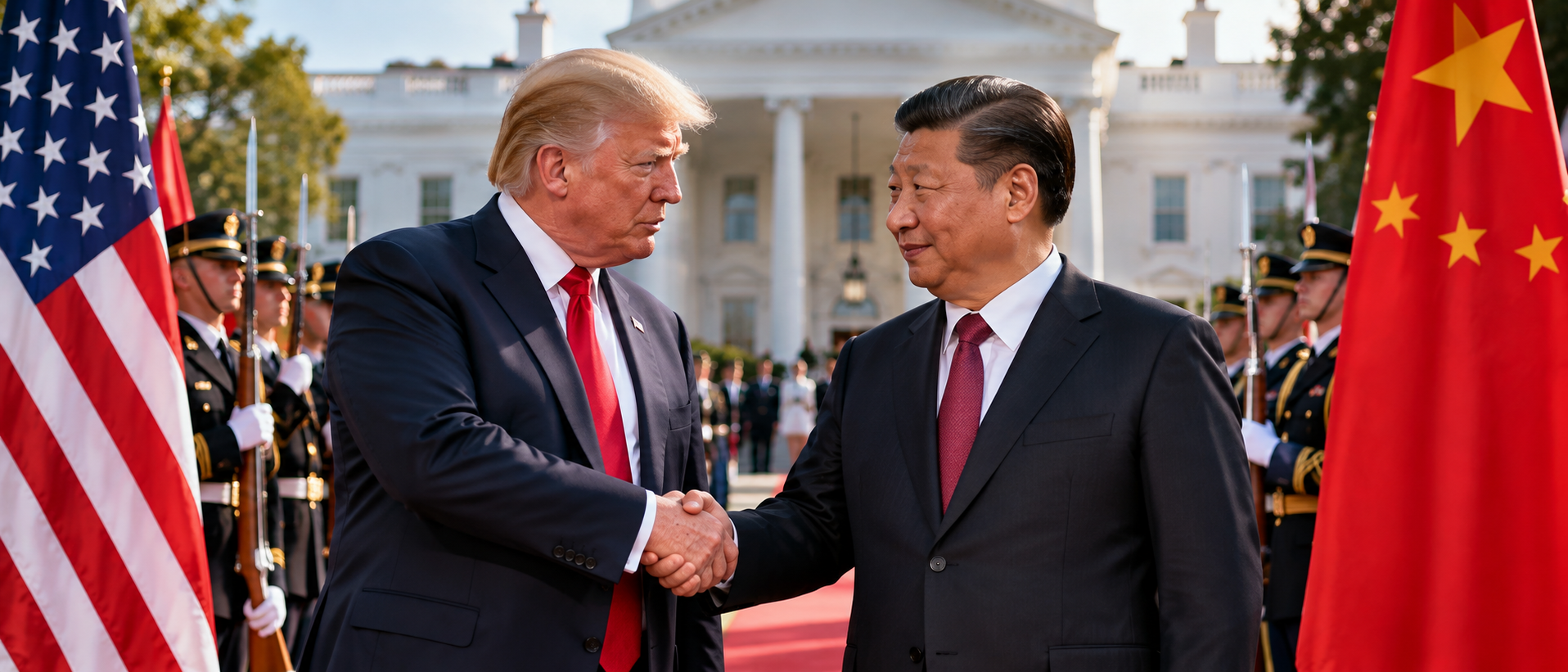
President Donald Trump hosted Chinese President Xi Jinping at the White House on Thursday for a grand summit that delivered plenty of pageantry but little in terms of concrete progress. Major sticking points, including artificial intelligence, trade tensions, Taiwan, and the ongoing conflict involving Iran, remained without any clear resolution.
By Kamil Wrona | Last Updated: 25 Sep 2026
The evening featured a formal state dinner attended by both leaders and their spouses, complete with an elegant menu highlighted by sesame-crusted sea bass and a guest list packed with prominent tech executives. Just outside the gates, demonstrators chanted phrases such as "China out of Hong Kong," their voices carrying clearly to the leaders as they posed for photographs on the White House steps.
Warm Words, But Few Details
Raising a toast during dinner, Trump remarked that although he and Xi lead very different systems of government, the bond between their nations has never been stronger, and that relations between the two men personally are at an all-time high. Later, he brought guests along to see the construction site of a new ballroom he's building nearby, following an earlier tour where he'd shown Xi a newly built helipad on the grounds. Big building projects have become something of a signature move for Trump, who has poured considerable energy into reshaping the capital's physical landscape.
Xi, for his part, described the talks as substantive, saying the two sides had reached a shared understanding on a range of topics that would offer fresh strategic direction for the relationship going forward, though he didn't go into specifics. He stressed that both nations, as major global powers, need to act responsibly and find a new way to coexist peacefully.
Taiwan, Trade, And A Shift In Tone
Behind closed doors during the afternoon session, Xi reportedly pushed Trump to oppose Taiwanese independence, according to China's state media, tackling one of the most sensitive points of friction between the two countries. As of Thursday, the White House had not released its own account of that conversation.
There had been speculation that Xi would use the visit to lobby Trump into halting weapons sales to Taiwan. Back in May, after a trip to China, Trump indicated he was pausing a roughly $14 billion arms package to the island, describing it at the time as valuable leverage in negotiations. That decision unsettled some allies in the region, along with a handful of Trump's own party members, who worried he might trade away support for Taipei in pursuit of economic gains.
This meeting came just days after Trump delivered a forceful speech at the United Nations defending his willingness to use military force, even floating the idea of "annihilating" Iran. Yet his tone with Xi was noticeably softer, a shift that reflects how the balance of power has tilted somewhat toward Beijing following a trade dispute that ultimately ended with Washington backing down on tariffs.
When Xi arrived Thursday, Trump leaned heavily on the idea of a "truly great friendship" between the two men rather than dwelling on policy disagreements, noting that trade relations had improved since his May visit to China. Xi struck a slightly different note, emphasizing that the two economies were deeply connected and that any rivalry between them ought to remain healthy and constructive. He added that American businesses are welcome in China and expressed hope that Chinese firms would receive fair treatment in the US as well, while also calling for continued military-to-military communication to help prevent misunderstandings.
Edgard Kagan, who previously served as a senior White House official focused on East Asia, pointed out that the two leaders seemed to be playing different games entirely. According to Kagan, now affiliated with the Center for Strategic and International Studies, Trump framed the meeting around his personal rapport with Xi, while Xi appeared more guarded, treating it less as a personal matter and more as one between nations.
This marked Xi's first trip to Washington in over ten years and represents the second face-to-face meeting this year between the leaders of the world's two largest economies. For Trump, someone who thrives on ceremony and values relationships with influential figures, the visit carried as much weight symbolically as it did diplomatically.
Notably, several major broadcasters declined to air the leaders' remarks live, citing objections to recent White House press access restrictions. During his comments, Xi also emphasized that AI development worldwide must remain under human oversight at all times. Experts suggest that fierce rivalry between the two nations in the AI space will likely keep any agreements largely symbolic rather than substantive.
There's also been little indication that Beijing plans to pressure Iran into meeting US demands. Still, according to Chinese state media, Xi voiced support during the talks for the US and Iran to resume a ceasefire and work toward a lasting peace agreement eventually.
Among those attending the state dinner were some of the biggest names in tech, including Apple's Tim Cook, Amazon's Jeff Bezos, Alphabet's Sundar Pichai, OpenAI's Sam Altman, Tesla's Elon Musk, and Nvidia's Jensen Huang. Even with that star-studded turnout, insiders suggest Trump has no plans to loosen the export restrictions on American technology that Xi has been hoping to see eased.












 Home