politics

Russia Freezes Spending as Ukraine War Costs Exceed Budget by €24bn

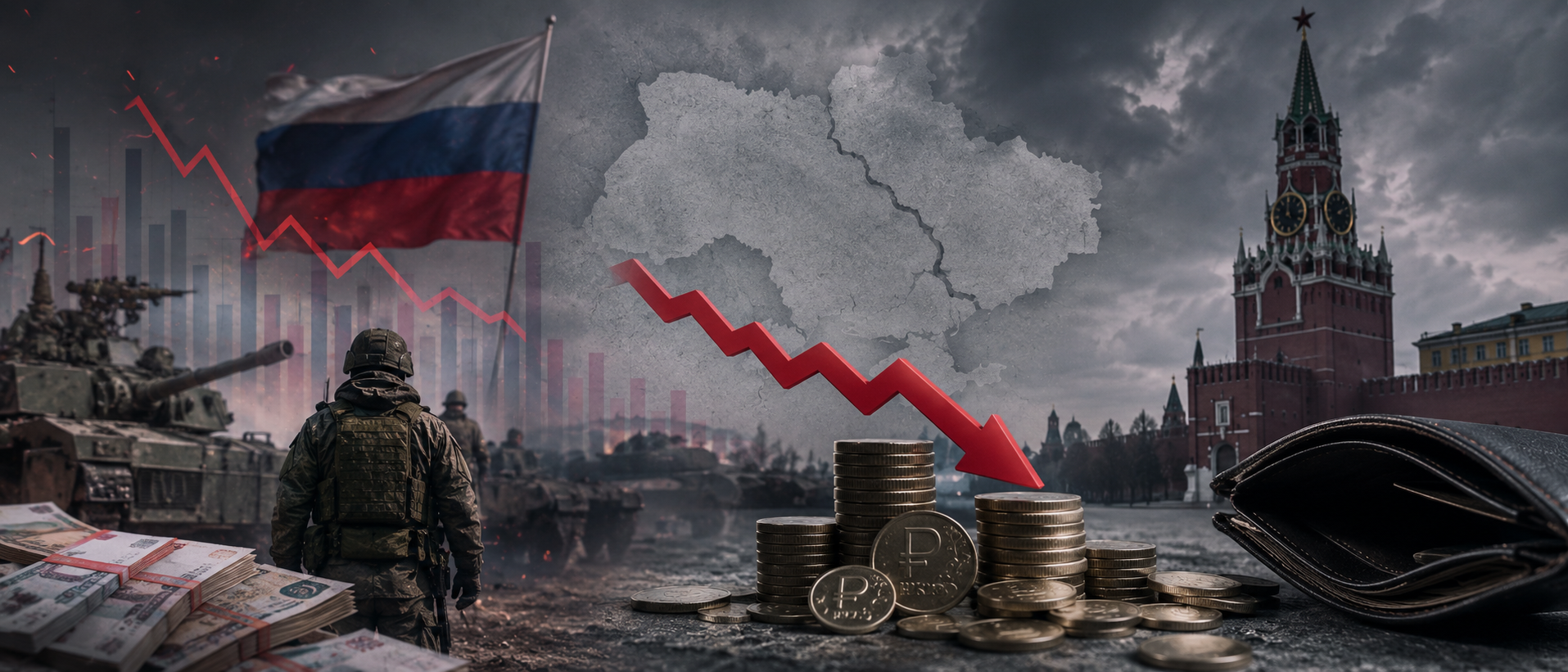
The financial strain of Russia's war in Ukraine is becoming harder to hide. Moscow's finance minister has urged the government to freeze non-essential spending after it emerged that military costs are running approximately €24 billion over budget this year alone. Despite dedicating a staggering 40 percent of the entire national budget to defense and security, Russia is finding it increasingly difficult to keep its finances from slipping further into the red.

By Kamil Wrona | Last Updated: 29 May 2026
The warning came in a letter sent by Finance Minister Anton Siluanov to the cabinet back in February — a document that paints a sobering picture of where Russia's economy is headed if the spending trajectory doesn't change.

The Numbers Behind the Crisis
The figures are stark. Moscow had already allocated more than €200 billion toward the war effort this year, working from an assumed budget deficit of around €46 billion. But just four months into 2026, that deficit had already climbed past €70 billion — equivalent to 2.5 percent of GDP. Siluanov warned that the €24 billion shortfall could potentially double over the course of the year as additional military expenditure piles up.

To try and get ahead of the problem, the finance ministry has asked the cabinet to freeze roughly €35 billion in spending this year. If left unaddressed, that figure could balloon to as much as €85 billion by 2028. This latest freeze request followed an earlier directive in January, when government agencies were told to voluntarily cut non-essential costs by 10 percent — a measure that deliberately excluded social programs and defense budgets from any reductions.

Siluanov was direct in his assessment of the situation. "Our reserves are not endless," he said. "We can't allow any weak points in our finances while such major transformations are going on in the world. The cabinet is working constantly to stabilize and balance state finances."

An Economy Showing Its Cracks
Beyond the budget numbers, broader economic warning signs are multiplying. A temporary boost from higher oil prices — driven in part by the conflict in Iran — has not been enough to make up for weaker-than-expected energy revenues and the adverse effects of a strong ruble on export income. The combination has left Russia in a tighter fiscal position than officials had publicly anticipated.

The mood among ordinary Russians is shifting, too. One investment analyst described a growing sense of public unease, with people closely watching government finances and asking difficult questions — about interest rate cuts, future tax increases, and which sector of society might face cuts next.

After more than four years of continuous warfare, Russia's economy is showing genuine signs of exhaustion. And notably, some officials within Russia have begun to openly question whether maintaining a costly and inconclusive stalemate in Ukraine is a sustainable path forward.

Related Posts

Latvia's Kulbergs Moves to Form New Coalition Government

Latvia's Kulbergs Moves to Form New Coalition Government

Latvia's political landscape is shifting fast. Just weeks after the ruling coalition fell apart, a new government could be taking shape by the end of this week. Opposition lawmaker Andris Kulbergs has been handed the task of pulling together a new cabinet, and by Monday, he was already signalling that things are moving in the right direction.

Magyar Files Criminal Complaint Over Shredded Ministry Documents

Magyar Files Criminal Complaint Over Shredded Ministry Documents

Hungary's new government is wasting no time going after its predecessor. Just days into office, Prime Minister Péter Magyar has announced plans to file a criminal complaint after workers clearing out a former ministry building stumbled upon something unexpected — bags full of shredded documents and what appeared to be Fidesz party campaign materials. For Magyar, it was too suspicious to ignore.

Hungary's New PM Magyar Picks Poland for First Foreign Visit in Bid to Repair Ties

Hungary's New PM Magyar Picks Poland for First Foreign Visit in Bid to Repair Ties

Péter Magyar has wasted no time signaling a new direction for Hungarian foreign policy. The newly appointed prime minister, who was sworn into office just last Saturday after his center-right Tisza party swept to a landslide election victory, has confirmed that Poland will be the destination of his first official trip abroad. The visit, set for next week, is widely seen as a deliberate first step toward mending a relationship between Warsaw and Budapest that became deeply strained during the long reign of his predecessor, Viktor Orbán.

Trump Says Ceasefire Holds Despite U.S.-Iran Gulf Clashes

Trump Says Ceasefire Holds Despite U.S.-Iran Gulf Clashes

Tensions between the United States and Iran flared dramatically on Thursday when naval forces from both sides exchanged fire in the Gulf, raising serious concerns about the fragile ceasefire that had been holding since April 7. The fighting put a month-old truce under serious strain and cast fresh doubt on diplomatic efforts to bring the conflict — sparked by joint U.S.-Israeli airstrikes on Iran on February 28 — to a negotiated close. Despite the violence, President Donald Trump insisted the ceasefire was still technically in place and downplayed the incident with characteristic bluntness.

Armenia Declares It Is Not Russia's Ally in Ukraine War

Armenia Declares It Is Not Russia's Ally in Ukraine War

Armenia has made its position crystal clear — it does not stand with Russia in the war against Ukraine. Prime Minister Nikol Pashinyan said publicly that his country is "not an ally" of Russia, a statement that landed like a thunderbolt in Moscow. The timing made it even more pointed. Just days earlier, Ukrainian President Volodymyr Zelenskyy had visited Yerevan for the first time in 24 years to attend the European Political Community summit — a gathering of roughly 48 European leaders that sent a loud signal about which direction Armenia is heading.

Poland Plans to Become Hub for US Energy in Europe

Poland Plans to Become Hub for US Energy in Europe

Poland is positioning itself as a key entry point for American energy into Central Europe. Speaking at a regional summit on Tuesday, Polish President Karol Nawrocki made clear that his country is ready to serve as a "northern gateway" for US gas imports to the region, calling the United States a "strategic partner" for the countries that sit between three of Europe's major seas.

Advertisement

LATEST INSIGHTS

Potrzebujemy chwili Twojej uwagi

Uwielbiamy pliki cookie — zarówno te jadalne, jak i cyfrowe, które ulepszają Twoje wrażenia z przeglądania. Pomagają nam one udoskonalać funkcjonalność naszej witryny i Twoje ogólne wrażenia. Podstawowe i funkcjonalne pliki cookie są niezbędne do prawidłowego działania witryny i nie można ich wyłączyć. Ponadto używamy plików cookie w celu optymalizacji wydajności („komfort”) i wyświetlania spersonalizowanych reklam („marketing”), na co potrzebujemy Twojej zgody. Kliknij „Zezwól na wszystkie”, aby wyrazić zgodę na przetwarzanie danych. Uwielbiamy pliki cookie — zarówno te jadalne, jak i cyfrowe, które ulepszają Twoje wrażenia z przeglądania. Pomagają nam one udoskonalać funkcjonalność naszej witryny i Twoje ogólne wrażenia z przeglądania. Podstawowe i funkcjonalne pliki cookie są niezbędne do prawidłowego działania witryny i nie można ich wyłączyć. Ponadto używamy plików cookie w celu optymalizacji wydajności („komfort”) i wyświetlania spersonalizowanych reklam („marketing”), na co potrzebujemy Twojej zgody. Kliknij „Zezwól na wszystkie”, aby wyrazić zgodę na przetwarzanie danych.

Twoja zgoda obowiązuje również na mocy art. 49 (1) (a) RODO, co oznacza, że ​​Twoje dane mogą być tymczasowo przetwarzane poza EOG, w tym w USA. W takich przypadkach wysokie europejskie standardy ochrony danych mogą nie być w pełni zagwarantowane, a władze USA mogą uzyskać dostęp do Twoich danych bez skutecznego środka prawnego. Możesz wycofać swoją zgodę w dowolnym momencie.

PrywatnośćWarunki korzystania z serwisu

Możesz zarządzać swoimi preferencjami dotyczącymi plików cookie lub wycofać zgodę w dowolnym momencie za pośrednictwem naszych ustawień plików cookie. Aby uzyskać więcej informacji, zapoznaj się z naszą Polityką prywatności.