world

Russia Funeral Industry Grows Amid Rising Mortality

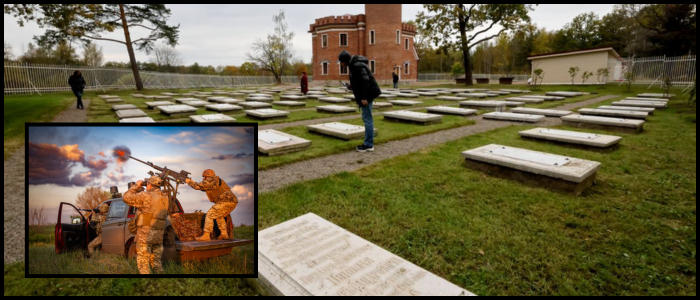
Russia's funeral industry is growing steadily as a result of an increase in mortality levels since Moscow has been conducting widespread military operations in Ukraine for several years. Funeral service companies are one of the few sectors showing consistent growth amidst economic instability, while changing demographics, increased deaths, and new economic conditions all impact how Russians manage the burial and cremation of their loved ones.

By Nikodem Baran | Last Updated: 26 Feb 2026
Increase in Mortality and Shifting Demographics
As of the first half of 2025, Russia has reported a total of 916,000 deaths, as reported by the health ministry. While this number is slightly lower than the total deaths from the same period in 2019 before the onset of the Covid pandemic, the numbers tell a much more serious story when you account for the decline in the total population. Russia's population continues to decline, resulting in a much increased mortality rate as compared to prior years.

According to a demographer from Russia, the rate of mortality in early 2025 was 13.1 deaths per 1,000 residents compared to 12.6 deaths per 1,000 in 2019. Although there was an increase in total mortality of only approximately 1% when compared to 2024, the distribution of where individuals die has changed dramatically. There has been a higher rate of deaths for the population between 15 and 59 years old than for those over 59. Additionally, there is a larger increase in male mortality than female mortality, demonstrating that there is a demographic imbalance between the sexes.

Demographic Consequences of War
A substantial percentage of the increase in the number of deaths is attributable to the continuing war in Ukraine. Deaths categorized as due to "other causes," which most find to be synonymous with military deaths, increased sharply to 102,000 in the first six months of 2025 compared to 67,000 during the same period in the previous year.

Ukrainian military officials estimate that over 1 million Russian military members have died since the war started in 2022; thus, many analysts believe that the war has been a major contributor to increased mortality rates amongst working-aged males. In general, current increases in mortality rates can likely be attributed to the human cost of the war.

Funeral Industry Growth and Changing Customs
The increasing number of deaths in Russia has had a direct impact on the Russian funeral industry. In 2024, the Russian funeral industry had a total turnover of 108.3 billion rubles (€1.2 billion), which was an increase of 7.7% as compared to the previous year. For the first four months of 2025, industry turnover increased by 12.7% as compared to the same period in 2024. The number of newly registered funeral companies increased by 16% during the first half of 2024, indicating a strong level of business activity.

Increasing economic pressures are also changing how people are having funerals. While cremation was once uncommon outside of large cities, families are increasingly using cremation because it is less expensive than burial. Currently, Russia has 38 crematories, and the construction of numerous additional crematories is underway. Funeral directors indicated that using cremation allows family members to place the urn of their loved one in an existing grave instead of requiring the construction of an entirely new memorial. Some instances exist in which family members transported their deceased loved ones to a different city where cremation services were cheaper.

One measure of the increasing demand for cremations is the rising demand for cardboard coffins constructed for use with a cremation. Cardboard coffins are priced between 1,200 and 4,000 rubles (€13–€44), and manufacturers are marketing them as environmentally friendly due to their rapid burning and clean ash. Around 1,000 units are sold monthly, with demand occasionally exceeding availability, indicating that the increasing number of deaths in Russia is changing the customs around funerals.

Related Posts

Ukraine Confirms Easter Weekend Ceasefire

Ukraine Confirms Easter Weekend Ceasefire

Ukraine and Russia are set to temporarily pause hostilities over the upcoming weekend in observance of Orthodox Easter. Ukrainian President Volodymyr Zelenskyy confirmed the development, stating that Kyiv is prepared to take "symmetrical steps" after Russian President Vladimir Putin issued a decree for the ceasefire.

Putin Announces Easter Ceasefire in Ukraine

Putin Announces Easter Ceasefire in Ukraine

According to Russian President Vladimir Putin, a two-day ceasefire is in place to coincide with the Orthodox Easter holiday. The ceasefire will occur between April 11 and April 12. The Russian government is hoping the authorities in Kyiv will also observe this ceasefire. Previous ceasefires have failed to establish a long-term peaceful resolution between Russia and Ukraine.

US Military Presence Near Iran to Continue

US Military Presence Near Iran to Continue

On Wednesday, U.S. President Donald Trump said the United States Military will maintain its troops, ships, and air units in and around Iran until Iran fully implements the 'real agreement.

Russia Stops Smuggling of Submarine Engine Parts

Russia Stops Smuggling of Submarine Engine Parts

According to Russia's Federal Security Service (FSB), they have prevented an illegal operation to export submarine parts from Russia. Authorities have asserted that a Russian man has been arrested in St. Petersburg and Leningrad Oblast as he prepared to export significant engine components out of the country.

Trump Announces Two-Week Iran Ceasefire

Trump Announces Two-Week Iran Ceasefire

On Tuesday, right before the 90-day ultimatum that the US declared about whether to allow shipping through the Strait of Hormuz was set to expire, Donald Trump announced that he had reached a temporary ceasefire with Iran. This ceasefire occurred after months of threats from the US to conduct significant military strikes on Iranian civilian infrastructure if Iran did not meet US conditions/demands. The agreement was reached using the services of Asim Munir (Pakistani Chief of Army) and Shehbaz Sharif (Pakistani Prime Minister).

Gulf States Consider Low-Cost Interceptor Drones

Gulf States Consider Low-Cost Interceptor Drones

Countries, including Saudi Arabia and the UAE, are exploring the use of a new and inexpensive missile defense system to combat Iranian aerial threats. They have chosen to use drone interceptors designed in Ukraine for approximately $2,500 apiece. Since both Gulf nations and the United States are running out of expensive missile defense systems as the regional conflict continues, the timing of this decision makes sense. One of the companies that will provide this service, Terra Drone, has seen a significant increase in potential Middle Eastern customers for their drone interceptors.

Advertisement

LATEST INSIGHTS

Potrzebujemy chwili Twojej uwagi

Uwielbiamy pliki cookie — zarówno te jadalne, jak i cyfrowe, które ulepszają Twoje wrażenia z przeglądania. Pomagają nam one udoskonalać funkcjonalność naszej witryny i Twoje ogólne wrażenia. Podstawowe i funkcjonalne pliki cookie są niezbędne do prawidłowego działania witryny i nie można ich wyłączyć. Ponadto używamy plików cookie w celu optymalizacji wydajności („komfort”) i wyświetlania spersonalizowanych reklam („marketing”), na co potrzebujemy Twojej zgody. Kliknij „Zezwól na wszystkie”, aby wyrazić zgodę na przetwarzanie danych. Uwielbiamy pliki cookie — zarówno te jadalne, jak i cyfrowe, które ulepszają Twoje wrażenia z przeglądania. Pomagają nam one udoskonalać funkcjonalność naszej witryny i Twoje ogólne wrażenia z przeglądania. Podstawowe i funkcjonalne pliki cookie są niezbędne do prawidłowego działania witryny i nie można ich wyłączyć. Ponadto używamy plików cookie w celu optymalizacji wydajności („komfort”) i wyświetlania spersonalizowanych reklam („marketing”), na co potrzebujemy Twojej zgody. Kliknij „Zezwól na wszystkie”, aby wyrazić zgodę na przetwarzanie danych.

Twoja zgoda obowiązuje również na mocy art. 49 (1) (a) RODO, co oznacza, że ​​Twoje dane mogą być tymczasowo przetwarzane poza EOG, w tym w USA. W takich przypadkach wysokie europejskie standardy ochrony danych mogą nie być w pełni zagwarantowane, a władze USA mogą uzyskać dostęp do Twoich danych bez skutecznego środka prawnego. Możesz wycofać swoją zgodę w dowolnym momencie.

PrywatnośćWarunki korzystania z serwisu

Możesz zarządzać swoimi preferencjami dotyczącymi plików cookie lub wycofać zgodę w dowolnym momencie za pośrednictwem naszych ustawień plików cookie. Aby uzyskać więcej informacji, zapoznaj się z naszą Polityką prywatności.