world

Russia's Missiles Near Chornobyl Raise Nuclear Accident Risk

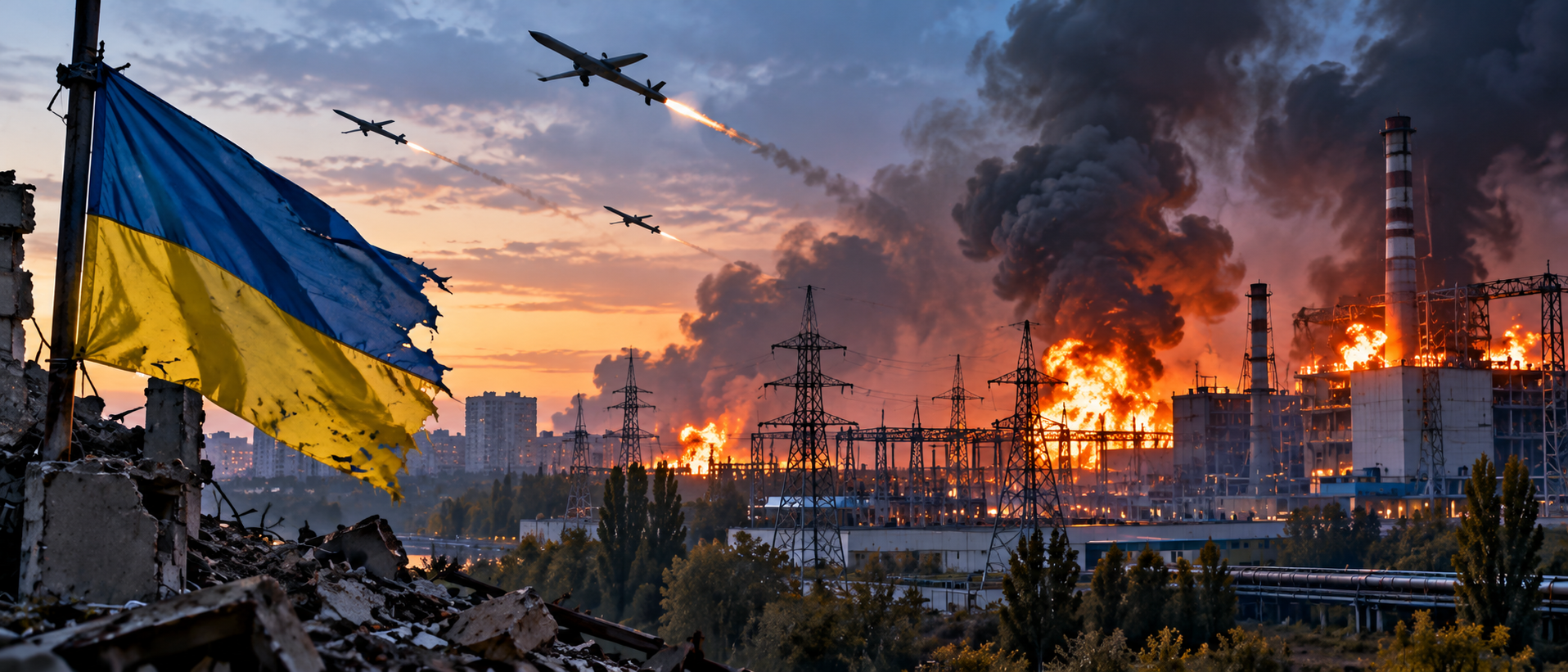
Ukraine has raised the alarm over what it describes as a deeply dangerous pattern of Russian military behaviour near its nuclear sites. According to Ukraine's Prosecutor General Ruslan Kravchenko, Russia has repeatedly launched drones and missiles along flight paths that bring them dangerously close to the decommissioned Chornobyl nuclear plant and other active nuclear facilities — raising the very real prospect of a catastrophic accident. The warnings come as Ukraine prepares to mark the 40th anniversary of the 1986 Chornobyl disaster this Sunday.

By Oskar Malec | Last Updated: 22 Apr 2026
A Pattern of Dangerous Fly-Bys
Ukraine operates four nuclear power plants, including Europe's largest, located in the southern Zaporizhzhia region, which has been under Russian military occupation since early in the full-scale invasion that began in 2022. Both the Chornobyl site and the two-reactor Khmelnytskyi nuclear plant in western Ukraine have repeatedly found themselves on the flight path of Russian hypersonic Kinzhal missiles. Kravchenko said radar tracking had identified 35 Kinzhal missiles passing within roughly 20 kilometres of either facility, with 18 of those flying within that range of both sites on the same flight path. Three Kinzhal missiles also came down and landed within around 10 kilometres of the Khmelnytskyi plant during their flights, with no clear sign they had been intercepted.

The Kinzhal is an air-launched hypersonic missile capable of carrying a 500-kilogram warhead and travelling at speeds of around 6,500 kilometres per hour — covering five kilometres in just a few seconds. Since July 2024, when Russia escalated its drone campaign against Ukraine, at least 92 Russian drones have been tracked flying within a five-kilometre radius of Chornobyl's radiation containment shield. Kravchenko noted the actual figure is almost certainly far higher, as radar readings can represent more than one drone and some go undetected entirely. "Such launches cannot be explained by any military considerations," he said, adding that the flights appear designed purely to intimidate. Russia's defence ministry offered no response.

The Damage Already Done and the Risk Ahead
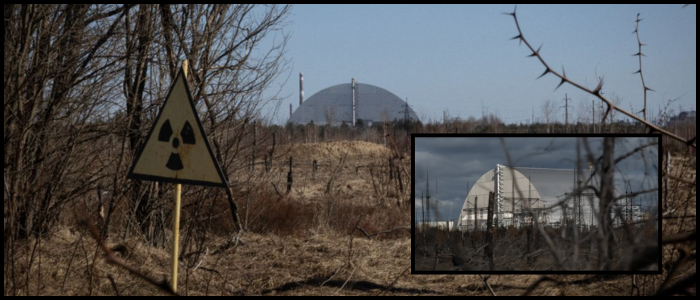
The containment shield at Chornobyl — built to prevent radiation leaking from Reactor No. 4, which exploded on April 26, 1986 — was struck in February last year by what Ukraine identified as a long-range Russian attack drone. The impact pierced the structure. Russia denied responsibility, claiming Ukraine had staged the incident as a provocation. Ukrainian prosecutors concluded after their own investigation that the strike was most likely deliberate, based on the steep angle at which the drone hit — consistent with how one-way attack drones behave in their final descent toward a target. The European Bank for Reconstruction and Development has estimated that repairs will cost at least 500 million euros, equivalent to around $588 million. Without that work, it has been warned that irreversible corrosion of the structure will set in within four years.

The International Atomic Energy Agency has repeatedly flagged the dangers of military activity near nuclear sites and attacks on electrical infrastructure critical to nuclear safety. IAEA Director General Rafael Grossi has called on all sides to exercise maximum restraint near such facilities. Ukraine believes Russia is deliberately using Chornobyl as a corridor for drone attacks, exploiting the fact that Ukrainian air defences are concentrated around populated areas and key infrastructure — leaving the exclusion zone, located less than 10 kilometres from the Belarusian border and around 100 kilometres from Kyiv, dangerously exposed.

Related Posts

Iran War Risks Turning Into Long Regional Conflict

Iran War Risks Turning Into Long Regional Conflict

The ongoing war between the US, Israel, and Iran is at real risk of turning into a drawn-out regional conflict, according to foreign-policy expert Galip Dalay, who says diplomatic efforts have so far failed to bridge the gap between the two sides. Dalay, a senior research fellow at Chatham House and co-director of Oxford University's Global Orders Programme, shared his assessment during the World Talks program at Impact Leading Minds in Warsaw.

5,000-Year-Old Necklace Made From Teeth Found in Poland

5,000-Year-Old Necklace Made From Teeth Found in Poland

A strange and striking piece of ancient jewellery has come to light in southern Poland, and it's not made of stone or metal but of teeth. Archaeologists uncovered a necklace crafted from 42 individual teeth, buried in a grave more than 5,000 years old. Experts believe the teeth likely came from wolves, dogs, and bears, though two of them bear an unsettling resemblance to human canines. The find turned up during excavation work at a burial mound near the village of Żórawina.

Germany Hit by Second Power Grid Sabotage Attack

Germany Hit by Second Power Grid Sabotage Attack

Germany's electricity network has come under attack for the second time in a short span, with police confirming on Wednesday that they're investigating an incident at a substation near the western city of Bergheim.

Russian Developers Profit Big in Occupied Ukraine

Russian Developers Profit Big in Occupied Ukraine

Russian construction companies are cashing in on occupied Ukrainian territory, building more than 1.3 million square meters of housing with the help of generous state support. An investigation into the projects found that developers are benefiting from cheap loans, tax breaks and discounted land, all while original residents whose homes were destroyed are still waiting for compensation.

Polish Crews Join Balloon Race Near Russian Border

Polish Crews Join Balloon Race Near Russian Border

A long-distance balloon race is once again testing the skies, but this year's edition carries an extra layer of tension. Crews launched from Gladbeck, Germany, aiming to travel as far as possible from the starting point, all while flying uncomfortably close to a region shadowed by military risk.

Bodies of 12 Bus Crash Victims Return to Poland

Bodies of 12 Bus Crash Victims Return to Poland

The bodies of twelve Polish nationals who lost their lives in a coach crash in Hungary were flown back to Poland on Wednesday, arriving aboard two military transport planes. Officials confirmed the repatriation as autopsies were set to begin, scheduled to take place over Thursday and Friday in the southern city of Kraków.

Advertisement

LATEST INSIGHTS

Potrzebujemy chwili Twojej uwagi

Uwielbiamy pliki cookie — zarówno te jadalne, jak i cyfrowe, które ulepszają Twoje wrażenia z przeglądania. Pomagają nam one udoskonalać funkcjonalność naszej witryny i Twoje ogólne wrażenia. Podstawowe i funkcjonalne pliki cookie są niezbędne do prawidłowego działania witryny i nie można ich wyłączyć. Ponadto używamy plików cookie w celu optymalizacji wydajności („komfort”) i wyświetlania spersonalizowanych reklam („marketing”), na co potrzebujemy Twojej zgody. Kliknij „Zezwól na wszystkie”, aby wyrazić zgodę na przetwarzanie danych. Uwielbiamy pliki cookie — zarówno te jadalne, jak i cyfrowe, które ulepszają Twoje wrażenia z przeglądania. Pomagają nam one udoskonalać funkcjonalność naszej witryny i Twoje ogólne wrażenia z przeglądania. Podstawowe i funkcjonalne pliki cookie są niezbędne do prawidłowego działania witryny i nie można ich wyłączyć. Ponadto używamy plików cookie w celu optymalizacji wydajności („komfort”) i wyświetlania spersonalizowanych reklam („marketing”), na co potrzebujemy Twojej zgody. Kliknij „Zezwól na wszystkie”, aby wyrazić zgodę na przetwarzanie danych.

Twoja zgoda obowiązuje również na mocy art. 49 (1) (a) RODO, co oznacza, że ​​Twoje dane mogą być tymczasowo przetwarzane poza EOG, w tym w USA. W takich przypadkach wysokie europejskie standardy ochrony danych mogą nie być w pełni zagwarantowane, a władze USA mogą uzyskać dostęp do Twoich danych bez skutecznego środka prawnego. Możesz wycofać swoją zgodę w dowolnym momencie.

PrywatnośćWarunki korzystania z serwisu

Możesz zarządzać swoimi preferencjami dotyczącymi plików cookie lub wycofać zgodę w dowolnym momencie za pośrednictwem naszych ustawień plików cookie. Aby uzyskać więcej informacji, zapoznaj się z naszą Polityką prywatności.