world

Trump Moves to Free Ships Stuck in Strait of Hormuz

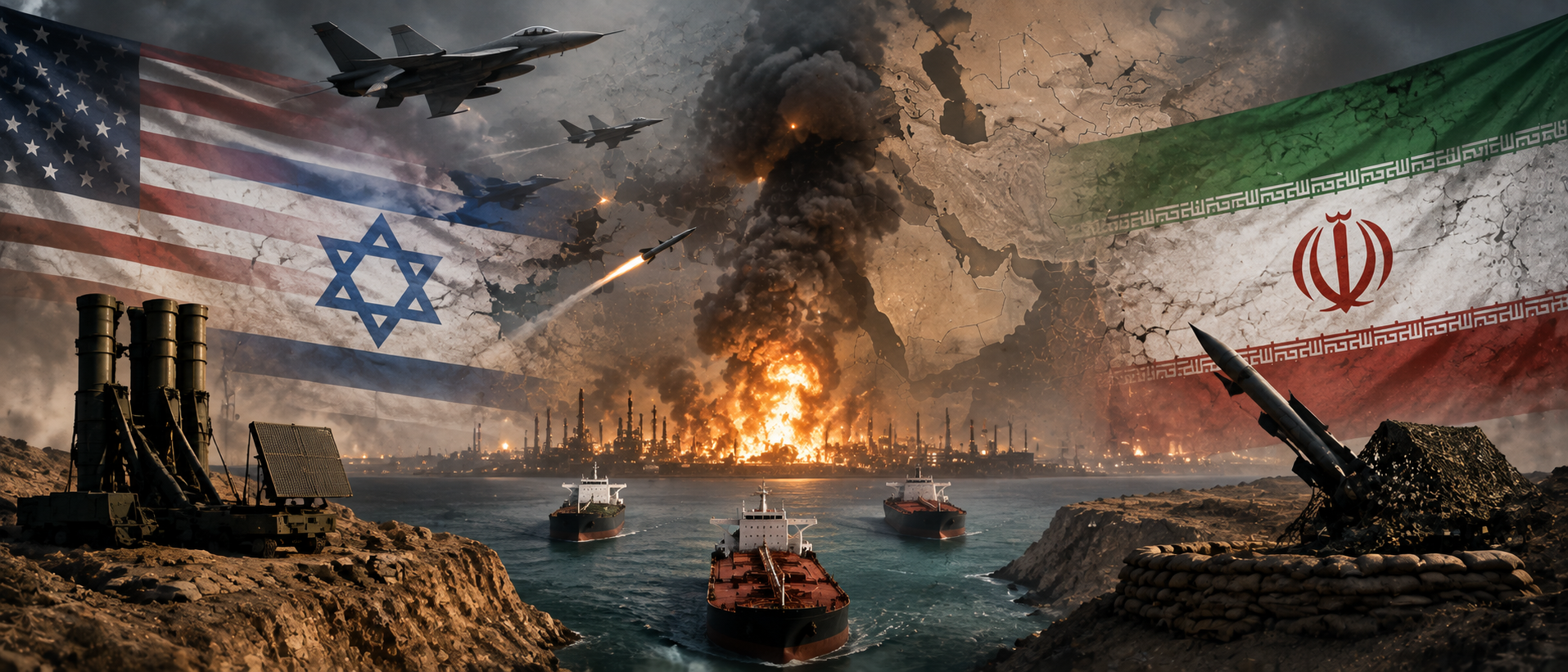
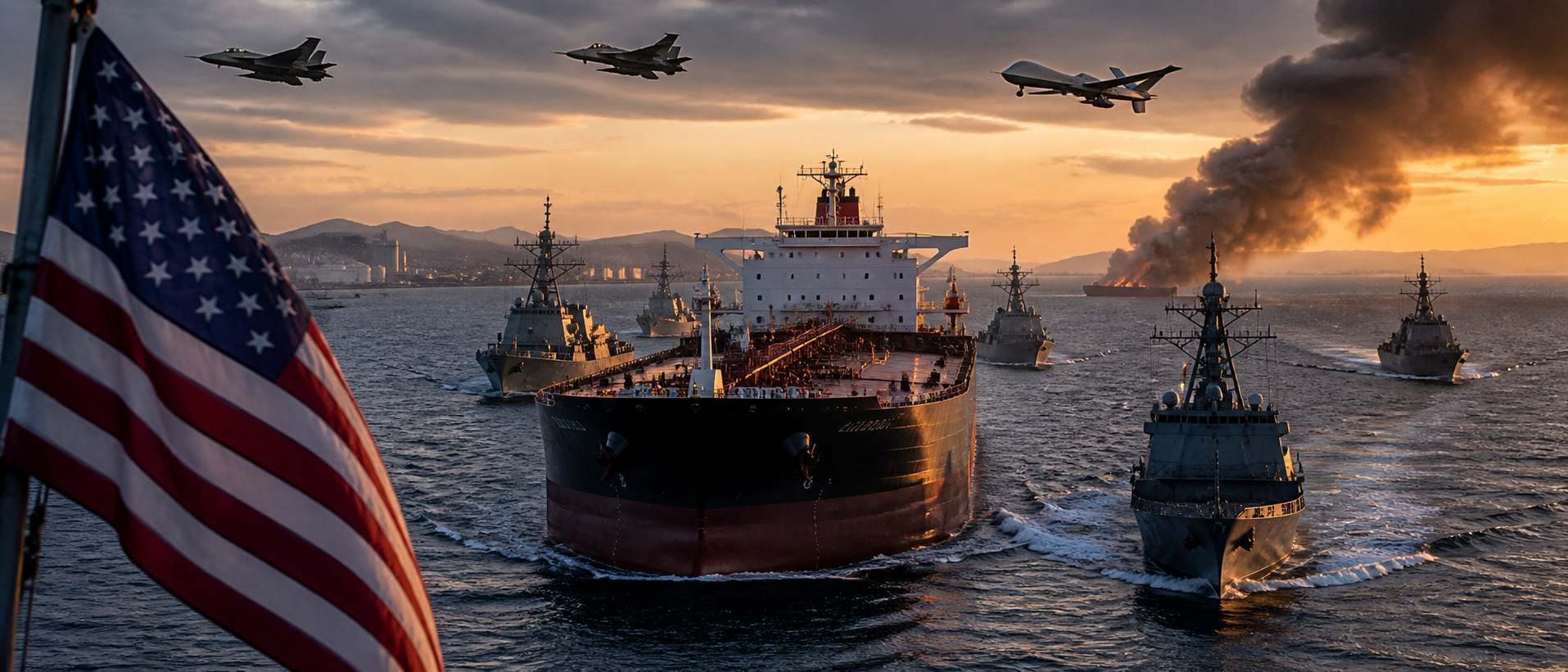
The Strait of Hormuz has become one of the world's most tense flashpoints, and now the United States is stepping directly into the middle of it. President Donald Trump announced that America would begin escorting stranded commercial vessels safely out of the Gulf waterway — a move that comes as hundreds of ships and roughly 20,000 seafarers remain stuck, some running dangerously low on food and basic supplies. Almost immediately after that announcement, a tanker in the strait reported being struck by unknown projectiles, raising the stakes even further.

By Oskar Malec | Last Updated: 4 May 2026
A Military Commitment With a Clear Warning
Trump made his intentions known through a post on Truth Social, saying Washington would guide ships safely through the restricted waterway so crews and cargo could get moving again. The operation is substantial. U.S. Central Command confirmed it would back the mission with 15,000 military personnel, more than 100 aircraft operating from both land and sea, along with warships and drones. CENTCOM described the goal plainly — restoring freedom of navigation for commercial shipping through the strait.

Admiral Brad Cooper, the CENTCOM commander, called the support essential not just for regional stability but for the global economy as a whole, noting the effort would run alongside the existing naval blockade. Trump himself left little room for ambiguity about consequences, warning that any attempt to interfere with the operation would be dealt with forcefully.

The United Kingdom Maritime Trade Operations agency reported the tanker strike shortly after Trump's remarks, adding that the vessel was hit around 78 nautical miles north of Fujairah in the UAE. All crew members were reported safe.

Iran has been restricting Gulf shipping — excluding its own vessels — for over two months now. That blockade has pushed energy prices sharply higher, with the Strait of Hormuz accounting for around 20 percent of the world's oil and gas supply. Some ships that tried to pass through have been fired upon, and Iran seized several others. Last month, the U.S. responded with its own blockade targeting ships from Iranian ports. Washington has also been working to pull together an international coalition to help secure the waterway, with CENTCOM saying the latest push would pair diplomatic efforts with military coordination.

Peace Talks Stall as Both Sides Hold Their Ground
While tensions play out at sea, back-channel diplomacy continues — though progress remains slow. Iran submitted a 14-point peace proposal, which was conveyed to Washington through Pakistan. Tehran is now waiting on a U.S. response. Iranian state media quoted Foreign Ministry spokesperson Esmaeil Baghaei confirming that nuclear negotiations are not currently on the table, with Iran apparently wanting to hold those discussions until after the conflict ends and both sides agree to lift their competing shipping blockades.

That position clashes directly with what Washington has been insisting on. The U.S. wants Iran to agree to strict limits on its nuclear program before any war can end — including giving up its stockpile of more than 400 kilograms of highly enriched uranium. Iran says its nuclear activities are peaceful but has signaled some willingness to accept limits if sanctions are lifted, pointing to the 2015 agreement that Trump walked away from during his first term.

Trump said Sunday that talks were going well, though he offered nothing concrete to back that up. He had also said on Saturday that he had not yet read the full Iranian proposal but was leaning toward rejecting it, arguing that Iran had not paid a steep enough price. The U.S. and Israel paused their bombing campaign against Iran four weeks ago, and one round of talks followed — but efforts to arrange further meetings have hit a wall. Iran's proposal also calls for a U.S. troop withdrawal from nearby areas, the release of frozen assets, financial compensation, an end to hostilities, including in Lebanon, and a new mechanism to manage control of the strait.

With Trump facing domestic pressure over rising gasoline prices ahead of November's midterm congressional elections, finding a way to reopen the strait has become as much a political priority as a strategic one.

Related Posts

Experts Warn Putin Is Using Ceasefire Talk to Stall, Not Settle

Experts Warn Putin Is Using Ceasefire Talk to Stall, Not Settle

As diplomatic chatter around a potential Ukraine ceasefire grows louder, at least one prominent security analyst is urging Washington to keep its guard up. Ivana Stradner, a research fellow at the Foundation for Defense of Democracies and a specialist in Russian security strategy and information operations, believes Vladimir Putin is not genuinely pursuing peace. Instead, she argues, the Russian president is leveraging ceasefire language to buy time on the battlefield while simultaneously positioning himself as an indispensable global power broker — on Ukraine and beyond.

U.S. Supports Poland Joining G20 as Permanent Member

U.S. Supports Poland Joining G20 as Permanent Member

Washington has thrown its weight behind Poland's bid to become a permanent member of the G20, marking a significant diplomatic gesture as the two NATO allies deepen their cooperation across a broad range of strategic areas. The endorsement came out of high-level bilateral talks held in Warsaw, where the U.S. State Department and the Polish Foreign Ministry sat down to map out the future of their partnership — from energy and defense to critical minerals and technology security.

Trump Administration Builds Global Coalition to Reopen Strait of Hormuz

Trump Administration Builds Global Coalition to Reopen Strait of Hormuz

The Trump administration is quietly reaching out to allied nations, looking to pull together an international coalition aimed at restoring safe passage through the Strait of Hormuz. The effort, rooted in a State Department directive approved by Secretary of State Marco Rubio, centers on a new joint initiative called the Maritime Freedom Construct or MFC — developed in coordination with the Pentagon and dated April 28.

U.S. Pledges $100 Million to Fix Chernobyl Radiation Shield

U.S. Pledges $100 Million to Fix Chernobyl Radiation Shield

The United States has stepped forward with a major financial commitment to help fix the protective dome covering the most dangerous reactor at the Chernobyl nuclear plant in northern Ukraine. Energy Minister Denys Shmyhal announced that Washington will contribute $100 million toward restoring the structure, which shields the world from lingering radiation left behind by the 1986 disaster — the worst nuclear accident in history.

UK Royals Visit Trump Amid US-Britain Diplomatic Tensions

UK Royals Visit Trump Amid US-Britain Diplomatic Tensions

A warm welcome at the White House could not fully mask the underlying tensions between the United States and the United Kingdom. After seeing the king and queen off in their limousine, Trump spoke briefly with reporters, calling it "a really good meeting" and describing the royal couple as "incredible people" and "a fantastic person," adding that hosting them was "a real honor."

Trump Rejects Iran's Staged Peace Proposal as Oil Prices Climb

Trump Rejects Iran's Staged Peace Proposal as Oil Prices Climb

Peace efforts between the United States and Iran hit another wall this week after Donald Trump expressed his dissatisfaction with Tehran's latest proposal to end the ongoing conflict. A U.S. official familiar with the president's Monday meeting with senior advisers confirmed that Trump was unhappy with what Iran had put on the table — dimming hopes for a near-term resolution to a war that has rattled global energy markets, pushed up inflation, and cost thousands of lives since it began in February.

Advertisement

LATEST INSIGHTS

Potrzebujemy chwili Twojej uwagi

Uwielbiamy pliki cookie — zarówno te jadalne, jak i cyfrowe, które ulepszają Twoje wrażenia z przeglądania. Pomagają nam one udoskonalać funkcjonalność naszej witryny i Twoje ogólne wrażenia. Podstawowe i funkcjonalne pliki cookie są niezbędne do prawidłowego działania witryny i nie można ich wyłączyć. Ponadto używamy plików cookie w celu optymalizacji wydajności („komfort”) i wyświetlania spersonalizowanych reklam („marketing”), na co potrzebujemy Twojej zgody. Kliknij „Zezwól na wszystkie”, aby wyrazić zgodę na przetwarzanie danych. Uwielbiamy pliki cookie — zarówno te jadalne, jak i cyfrowe, które ulepszają Twoje wrażenia z przeglądania. Pomagają nam one udoskonalać funkcjonalność naszej witryny i Twoje ogólne wrażenia z przeglądania. Podstawowe i funkcjonalne pliki cookie są niezbędne do prawidłowego działania witryny i nie można ich wyłączyć. Ponadto używamy plików cookie w celu optymalizacji wydajności („komfort”) i wyświetlania spersonalizowanych reklam („marketing”), na co potrzebujemy Twojej zgody. Kliknij „Zezwól na wszystkie”, aby wyrazić zgodę na przetwarzanie danych.

Twoja zgoda obowiązuje również na mocy art. 49 (1) (a) RODO, co oznacza, że ​​Twoje dane mogą być tymczasowo przetwarzane poza EOG, w tym w USA. W takich przypadkach wysokie europejskie standardy ochrony danych mogą nie być w pełni zagwarantowane, a władze USA mogą uzyskać dostęp do Twoich danych bez skutecznego środka prawnego. Możesz wycofać swoją zgodę w dowolnym momencie.

PrywatnośćWarunki korzystania z serwisu

Możesz zarządzać swoimi preferencjami dotyczącymi plików cookie lub wycofać zgodę w dowolnym momencie za pośrednictwem naszych ustawień plików cookie. Aby uzyskać więcej informacji, zapoznaj się z naszą Polityką prywatności.