world

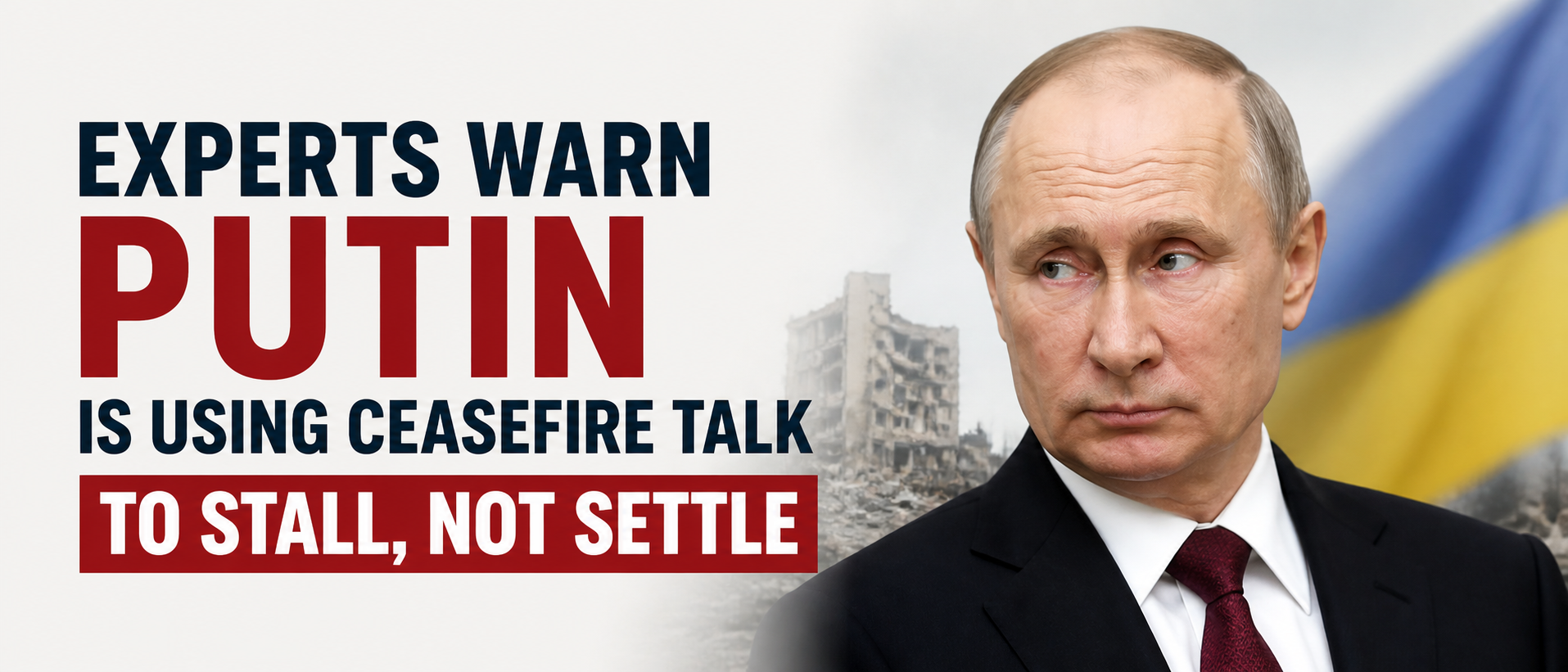
Experts Warn Putin Is Using Ceasefire Talk to Stall, Not Settle

As diplomatic chatter around a potential Ukraine ceasefire grows louder, at least one prominent security analyst is urging Washington to keep its guard up. Ivana Stradner, a research fellow at the Foundation for Defense of Democracies and a specialist in Russian security strategy and information operations, believes Vladimir Putin is not genuinely pursuing peace. Instead, she argues, the Russian president is leveraging ceasefire language to buy time on the battlefield while simultaneously positioning himself as an indispensable global power broker — on Ukraine and beyond.

By Oskar Malec | Last Updated: 1 May 2026
Her comments came in the wake of a phone call between U.S. President Donald Trump and Putin, during which both Ukraine and Iran were on the agenda. Trump indicated he had floated the idea of "a little bit of a ceasefire," but Kyiv has been cautious, questioning whether Moscow's approach reflects a genuine desire to end the war or simply a desire for a brief pause timed around Russia's May 9 Victory Day commemorations.

Putin's Two-Track Strategy
Stradner's reading of the situation is clear-eyed and pointed. She argues that Washington should approach any short-term Russian truce proposal with deep skepticism, citing what she describes as a consistent pattern — Moscow agreeing to pauses in fighting only to use that breathing room to regroup and reposition its forces. Peace, she contends, is not the actual objective.

According to Stradner, Putin is pursuing two things at once. First, he wants to persuade Trump that Russia can be treated as a trustworthy negotiating partner. Second, he wants to improve Russia's military footing before any substantive talks begin. Ukraine, for its part, has pushed for something far more meaningful — a full 30-day ceasefire. President Volodymyr Zelenskyy has been openly skeptical, suggesting that the Kremlin's proposal is designed more to ensure a calm backdrop for Moscow's Victory Day celebrations than to bring the war to a lasting end.

On the question of Iran, Stradner was equally direct. She cautioned against any assumption that Putin could serve as a useful go-between in U.S.-Iran negotiations, pointing out that Russia and Iran are strategic partners with closely aligned interests — interests that run counter to Washington's goals in the region. Her analogy was blunt: trusting Putin to help resolve the Iran situation, she said, is like asking an arsonist to help put out the fire. Russia, she argued, has backed Iran in both security and intelligence matters and has no real incentive to help the United States achieve its aims in the Middle East. What Putin actually wants, she said, is to be seen as Washington's equal on the world stage.

NATO, Sanctions, and the Road Ahead
Stradner also weighed in on the state of the NATO alliance, addressing concerns that Trump's past criticism of European defense spending and hints at a reduced U.S. role could weaken the bloc. She does not believe Trump will withdraw from NATO, but she does think he is serious about pushing European nations to shoulder more of the defense burden — and she sees signs that Europe is already responding, with member states increasing military spending and the alliance growing stronger as a result.

That said, she warned that Putin may attempt to probe NATO's resolve, particularly in the Baltic region or Central Europe, testing whether the alliance will hold firm when challenged. That moment of testing, she said, will be one of the defining challenges of Trump's presidency in the months ahead.

As for ending the war in Ukraine, Stradner's prescription is straightforward. Tougher sanctions on Russia's energy sector, the introduction of secondary sanctions, and the supply of serious offensive military capabilities to Ukraine — those are the levers she believes could genuinely shorten the conflict. Diplomatic gestures and ceasefire proposals, in her view, will not move Putin. Pressure will.

Related Posts

Tusk and Zelenskyy Meet Amid Lingering Diplomatic Tensions

Tusk and Zelenskyy Meet Amid Lingering Diplomatic Tensions

Poland's Prime Minister Donald Tusk sat down with Ukrainian President Volodymyr Zelenskyy on Wednesday, marking their first in-person meeting since relations between the two countries hit a rough patch back in May.

Polish Opposition to Ukraine's EU Membership Hits Record High

Polish Opposition to Ukraine's EU Membership Hits Record High

Opposition among Poles to Ukraine's European Union membership has reached its highest level on record, with 40% now opposed to the idea, according to a new opinion poll.

Czech Republic Faces New Heat Wave, Wildfire Risk Peaks

Czech Republic Faces New Heat Wave, Wildfire Risk Peaks

Central Europe is about to feel the heat again. A fresh wave of extreme temperatures is bearing down on the Czech Republic over the next few days, and authorities are already sounding the alarm over a heightened wildfire threat.

Polish Woman Killed in Berlin Pride Car Attack

Polish Woman Killed in Berlin Pride Car Attack

The single person killed when a vehicle plowed into crowds near Berlin's Pride celebrations this past weekend has been identified as a Polish national, according to a statement released by Poland's Foreign Ministry on Monday.

EU-Mercosur Deal Shows Early Benefits for Poland

EU-Mercosur Deal Shows Early Benefits for Poland

A month into a trade agreement that Poland fought hard against, the country's agriculture ministry is now admitting the deal has actually worked out in its favor, at least so far. Polish exports have picked up, and imports of certain food products have dropped, according to figures released this week.

Germany Funds 50,000-Drone Order for Ukraine's War

Germany Funds 50,000-Drone Order for Ukraine's War

Germany is behind the financing of a huge order for 50,000 attack drones destined for Ukraine, according to a person familiar with the arrangement. The deal ranks among the largest known drone purchases made by any Western government on Kyiv's behalf, underscoring just how central unmanned weapons have become to Ukraine's war effort.

Advertisement

LATEST INSIGHTS

Potrzebujemy chwili Twojej uwagi

Uwielbiamy pliki cookie — zarówno te jadalne, jak i cyfrowe, które ulepszają Twoje wrażenia z przeglądania. Pomagają nam one udoskonalać funkcjonalność naszej witryny i Twoje ogólne wrażenia. Podstawowe i funkcjonalne pliki cookie są niezbędne do prawidłowego działania witryny i nie można ich wyłączyć. Ponadto używamy plików cookie w celu optymalizacji wydajności („komfort”) i wyświetlania spersonalizowanych reklam („marketing”), na co potrzebujemy Twojej zgody. Kliknij „Zezwól na wszystkie”, aby wyrazić zgodę na przetwarzanie danych. Uwielbiamy pliki cookie — zarówno te jadalne, jak i cyfrowe, które ulepszają Twoje wrażenia z przeglądania. Pomagają nam one udoskonalać funkcjonalność naszej witryny i Twoje ogólne wrażenia z przeglądania. Podstawowe i funkcjonalne pliki cookie są niezbędne do prawidłowego działania witryny i nie można ich wyłączyć. Ponadto używamy plików cookie w celu optymalizacji wydajności („komfort”) i wyświetlania spersonalizowanych reklam („marketing”), na co potrzebujemy Twojej zgody. Kliknij „Zezwól na wszystkie”, aby wyrazić zgodę na przetwarzanie danych.

Twoja zgoda obowiązuje również na mocy art. 49 (1) (a) RODO, co oznacza, że ​​Twoje dane mogą być tymczasowo przetwarzane poza EOG, w tym w USA. W takich przypadkach wysokie europejskie standardy ochrony danych mogą nie być w pełni zagwarantowane, a władze USA mogą uzyskać dostęp do Twoich danych bez skutecznego środka prawnego. Możesz wycofać swoją zgodę w dowolnym momencie.

PrywatnośćWarunki korzystania z serwisu

Możesz zarządzać swoimi preferencjami dotyczącymi plików cookie lub wycofać zgodę w dowolnym momencie za pośrednictwem naszych ustawień plików cookie. Aby uzyskać więcej informacji, zapoznaj się z naszą Polityką prywatności.