Sunday
4 Oct 2026
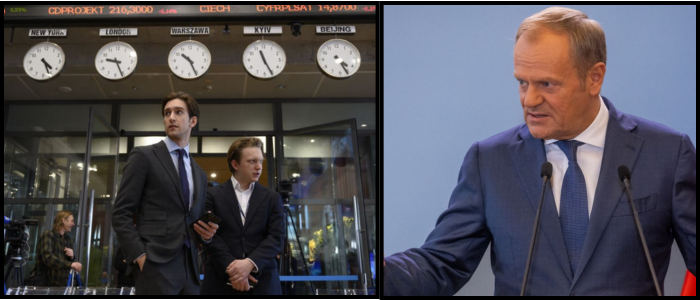
Polish markets have been immune to the latest presidential election result, with the zloty, government bond and stock indexes all moving less than 1%. Yet under that stability, worrying fiscal and credit trends are also emerging.
Economists warn that president-elect Karol Nawrocki may rail against government-backed reforms to cut a fiscal deficit, and secure EU aid. Any such revocation could prompt credit-ratings agencies to downgrade the outlook of Poland's country rating, which would indicate significant economic risk.
Financial aid from the EU could also be at risk if the judiciary situation is not sorted out. Moody's has warned that a return to politics as usual ahead of the 2027 election could see higher government spending, threatening 2026 deficit-reduction targets.
Rates Take a Breather Over Budgetary Questions
The National Bank of Poland kept its interest rate unchanged in June, suggesting it was in no rush to raise amid persistent inflation pressures and unclear fiscal condtions. Another rate cut was unlikely before September or October, central bank head Adam Glapiński said, noting increasing wages and the imminent end of price caps for electricity as the main risks.
With no clear draft 2026 budget, the central bank is wary of further monetary policy changes. And economists now believe the next rate move will not come until more fiscal clarity appears.
Bank Windfall Tax Proposal Heats Up Senior Political Tensions
Political tensions following the election have sparked debate in the ruling coalition for additional fiscal measures, such as a proposed windfall tax on bank profits. The junior coalition partner, Polska 2050, is calling for the tax, and potential mortgage relief if costs are passed on to consumers.
Despite the record profits of €9.4 billion achieved by the banking sector last year, it already pays a lot in taxes in corporate taxes and from a bank levy. Nevertheless, bank shares have been drifting lower ever since the election, with investors worried by ad-hoc fiscal shifts and increasing unpredictability in the financial sector.
Minimum Wage Under Scrutiny As Discussion Heats Up
The ministry of finance is proposing a 3 minimum wage rise for 2026, in line with inflation projections, while the ministry of family and labour has recommended a more generous 7.6 rise. As unions call for more and employers urge restraint, the decision will now depend on the Social Dialogue Council, but if no agreement is reached by mid-July, the government will decide.
Poland Approves Bill to Solidify Defense Spending
There is a crossparty majority in parliament for a proposal to enshrine a 4% GDP defence spending floor in the constitution. If enacted, it would take effect with the 2026 budget and fundamentally transform long-term fiscal planning. But questions remain about how the 4 percent will be figured and whether off-budget spending can be applied toward the total.
Russia's Wealth Fund Drains Fast
Russia's National Wealth Fund, once a fiscal cushion, is being depleted at breakneck speed. It lost nearly $6 billion in May alone, and now has less than $36 billion in liquid assets. Moscow, meanwhile, may be left with little choice other than to take drastic steps unless it can find a different path on Ukraine, given lower revenues and high spending on the war.
PREV NEWS
NEXT NEWS


The ongoing war between the US, Israel, and Iran is at real risk of turning into a drawn-out regional conflict, according to foreign-policy expert Galip Dalay, who says diplomatic efforts have so far failed to bridge the gap between the two sides. Dalay, a senior research fellow at Chatham House and co-director of Oxford University's Global Orders Programme, shared his assessment during the World Talks program at Impact Leading Minds in Warsaw.



BY Kamil Wrona

BY Nikodem Baran
BY Iwo Mazur
BY Kamil Wrona
BY Kamil Wrona
Uwielbiamy pliki cookie — zarówno te jadalne, jak i cyfrowe, które ulepszają Twoje wrażenia z przeglądania. Pomagają nam one udoskonalać funkcjonalność naszej witryny i Twoje ogólne wrażenia. Podstawowe i funkcjonalne pliki cookie są niezbędne do prawidłowego działania witryny i nie można ich wyłączyć. Ponadto używamy plików cookie w celu optymalizacji wydajności („komfort”) i wyświetlania spersonalizowanych reklam („marketing”), na co potrzebujemy Twojej zgody. Kliknij „Zezwól na wszystkie”, aby wyrazić zgodę na przetwarzanie danych. Uwielbiamy pliki cookie — zarówno te jadalne, jak i cyfrowe, które ulepszają Twoje wrażenia z przeglądania. Pomagają nam one udoskonalać funkcjonalność naszej witryny i Twoje ogólne wrażenia z przeglądania. Podstawowe i funkcjonalne pliki cookie są niezbędne do prawidłowego działania witryny i nie można ich wyłączyć. Ponadto używamy plików cookie w celu optymalizacji wydajności („komfort”) i wyświetlania spersonalizowanych reklam („marketing”), na co potrzebujemy Twojej zgody. Kliknij „Zezwól na wszystkie”, aby wyrazić zgodę na przetwarzanie danych.
Twoja zgoda obowiązuje również na mocy art. 49 (1) (a) RODO, co oznacza, że Twoje dane mogą być tymczasowo przetwarzane poza EOG, w tym w USA. W takich przypadkach wysokie europejskie standardy ochrony danych mogą nie być w pełni zagwarantowane, a władze USA mogą uzyskać dostęp do Twoich danych bez skutecznego środka prawnego. Możesz wycofać swoją zgodę w dowolnym momencie.
PrywatnośćWarunki korzystania z serwisu
Możesz zarządzać swoimi preferencjami dotyczącymi plików cookie lub wycofać zgodę w dowolnym momencie za pośrednictwem naszych ustawień plików cookie. Aby uzyskać więcej informacji, zapoznaj się z naszą Polityką prywatności.




 Home
Home