Monday
5 Oct 2026
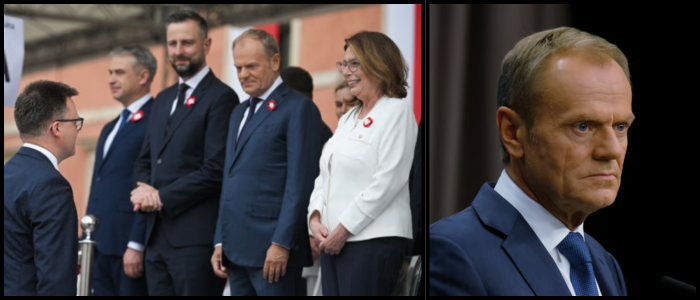
Polish Prime Minister Donald Tusk wants a vote of confidence in the Sejm to reunite his creaky coalition following a bitter defeat in the presidential election. But as the move seeks to demonstrate unity and grounds for resolve, it may instead underscore the deepening fissures within his government.
Nawrocki's Victory Alters Political Landscape in Poland
Tusk did not himself stand in the recent presidential ballot, but election was widely read as a referendum on his leadership. A loss by a liberal candidate, Rafał Trzaskowski, to the conservative Karol Nawrocki undercut the credibility of the governing coalition, while emboldening the opposition.
With support from the far-right Law and Justice (PiS) party, Nawrocki appears set to be a hardline head, blocking government bills and upping the ante with Tusk's government. His victory also consolidates the power of PiS leader Jarosław Kaczyński, who handpicked Nawrocki as a candidate, behind the opposition party and the presidency.
A Coalition Under Pressure
Tusk's coalition is already strained from within. The junior coalition partners, the Polish People's Party (PSL) and the New Left, receive pressure from voters and there is also growing discontent. PSL, a minority party in parliament at the polls, might bolt once the coalition began to lose support.
Poland's ruling coalition was also in disarray as Szymon Hołownia, the speaker of the Sejm and leader of Polska 2050, postponed the confidence vote until June 11. He called for more than mere lip service — real changes and better communication will be required in order to win back the voters' trust.
Tusk's decision to call for the vote just hours after the election result was intended to reassert authority. But the postponement, coupled with calls for a "new opening," suggests that support within the coalition is conditional and hesitant.
What the Vote Will and Won't Do
Even if Tusk prevails in the vote, his coalition will stay fragile. With Nawrocki in a position to block and obstruct progressive reforms and legislative initiatives, Tusk has two and a half more years of political stalemate ahead of him. He could not pass many of his party's trademark policies on judicial reform, media freedom and civil rights without a three-fifths majority to override vetoes.
For now, Tusk remains in place as prime minister but his command of the political agenda has slipped away. Some in his Civic Coalition, including Foreign Minister Radosław Sikorski, are already being floated as potential candidates for the future — a symptom of a growing discomfort from within the party.
If he wins the confidence vote it might prop up the government temporarily but it does not negate the looming prospect of early elections. Unless Tusk can bring his coalition together and begin delivering some clear wins, PiS and its allies have a good chance of gaining power again before the country next goes to the polls.
PREV NEWS
NEXT NEWS





BY Kamil Wrona

BY Nikodem Baran
BY Iwo Mazur
BY Kamil Wrona
BY Kamil Wrona
Uwielbiamy pliki cookie — zarówno te jadalne, jak i cyfrowe, które ulepszają Twoje wrażenia z przeglądania. Pomagają nam one udoskonalać funkcjonalność naszej witryny i Twoje ogólne wrażenia. Podstawowe i funkcjonalne pliki cookie są niezbędne do prawidłowego działania witryny i nie można ich wyłączyć. Ponadto używamy plików cookie w celu optymalizacji wydajności („komfort”) i wyświetlania spersonalizowanych reklam („marketing”), na co potrzebujemy Twojej zgody. Kliknij „Zezwól na wszystkie”, aby wyrazić zgodę na przetwarzanie danych. Uwielbiamy pliki cookie — zarówno te jadalne, jak i cyfrowe, które ulepszają Twoje wrażenia z przeglądania. Pomagają nam one udoskonalać funkcjonalność naszej witryny i Twoje ogólne wrażenia z przeglądania. Podstawowe i funkcjonalne pliki cookie są niezbędne do prawidłowego działania witryny i nie można ich wyłączyć. Ponadto używamy plików cookie w celu optymalizacji wydajności („komfort”) i wyświetlania spersonalizowanych reklam („marketing”), na co potrzebujemy Twojej zgody. Kliknij „Zezwól na wszystkie”, aby wyrazić zgodę na przetwarzanie danych.
Twoja zgoda obowiązuje również na mocy art. 49 (1) (a) RODO, co oznacza, że Twoje dane mogą być tymczasowo przetwarzane poza EOG, w tym w USA. W takich przypadkach wysokie europejskie standardy ochrony danych mogą nie być w pełni zagwarantowane, a władze USA mogą uzyskać dostęp do Twoich danych bez skutecznego środka prawnego. Możesz wycofać swoją zgodę w dowolnym momencie.
PrywatnośćWarunki korzystania z serwisu
Możesz zarządzać swoimi preferencjami dotyczącymi plików cookie lub wycofać zgodę w dowolnym momencie za pośrednictwem naszych ustawień plików cookie. Aby uzyskać więcej informacji, zapoznaj się z naszą Polityką prywatności.




 Home
Home